
Bioanalytical Services
Ligand binding assays for large-molecule PK
Crux Biolabs provides ligand binding assay (LBA) services to support pharmacokinetic assessment of biologics in clinical research. Our scientists develop, qualify and validate fit-for-purpose assays for the quantitative measurement of large-molecule therapeutics in biological matrices.
Using established plate-based assay platforms, including electrochemiluminescence and absorbance detection, we generate sensitive, selective and reliable data to support clinical-development decisions.
LBA services for large-molecule PK
Crux Biolabs supports clinical programs requiring quantitative analysis of biologic therapeutics. We develop ligand binding assays for pharmacokinetic assessment of modalities including monoclonal antibodies, bispecific antibodies and recombinant proteins.
We work with sponsors to define a fit-for-purpose LBA strategy based on the therapeutic modality, expected concentration range, biological matrix, sample volume and required study endpoints. From feasibility assessment and method development through to qualification, validation, clinical sample analysis and reporting, our scientists provide practical support throughout the assay lifecycle.
Designed around your study
| Study consideration | How Crux approaches it |
|---|---|
| Therapeutic modality | Select an LBA approach appropriate for the biologic, molecular target and intended measurement |
| Biological matrix | Consider the matrix, sample volume, collection conditions, potential interference and expected concentration range |
| Assay format | Select an appropriate platform and assay format based on sensitivity, selectivity and study requirements |
| Assay performance | Define fit-for-purpose performance characteristics, such as precision, accuracy, sensitivity, selectivity, stability and reportable range |
| Method lifecycle | Support feasibility, method development, qualification and validation, transfer, clinical sample analysis and reporting |
Applications in clinical research
Ligand binding assays are widely used for sensitive quantitative measurement of biologics in biological matrices. Crux Biolabs can support:
Large-molecule PK
Quantification of biologics in clinical-study samples
Target engagement and receptor occupancy
Supporting these endpoints where an LBA is scientifically appropriate
Method transfer and optimisation
Adapting established assays to the required study, matrix and performance requirements
Quality and compliance
Crux Biolabs’ ligand binding assay services are delivered within a quality framework aligned with applicable regulatory expectations for clinical bioanalysis. We apply fit-for-purpose method development, qualification and validation approaches based on the intended use of each assay and relevant bioanalytical guidance, including ICH M10 where applicable.
Crux Biolabs operates an ISO/IEC 17025-accredited, GCLP-compliant quality management system. Controlled processes, documented procedures and data-review practices support reliable, traceable and scientifically defensible results for clinical research.
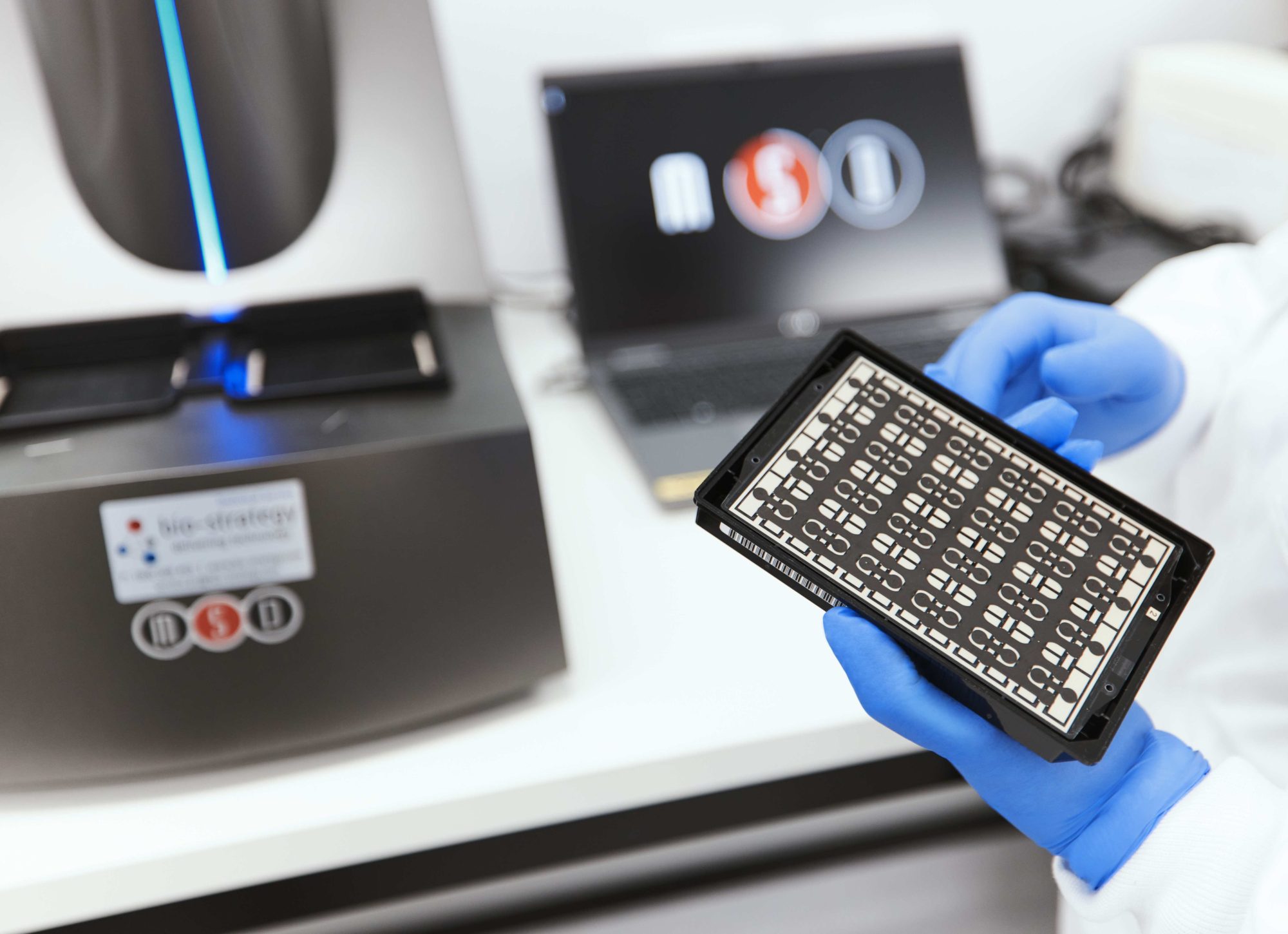
Plate-based LBA platforms
Crux Biolabs uses established plate-based ligand binding technologies to support sensitive quantitative bioanalysis of biologics. Available detection approaches include electrochemiluminescence, absorbance and fluorescence, allowing the assay format to be selected according to the analyte, matrix, expected concentration range and study requirements.
Our Meso Scale Discovery electrochemiluminescence platform supports sensitive analysis and may help address matrix complexity in suitable applications. We select the platform and assay design based on the specific requirements of each program.
Scientific support throughout the assay lifecycle
Our scientists work directly with sponsors from initial assay strategy through to clinical sample analysis and data delivery. This collaborative approach supports timely technical decisions, practical troubleshooting and clear communication throughout the project.
We provide guidance on assay design, critical reagents, sample handling, validation strategy and data review, helping keep the bioanalytical approach aligned with study objectives as the program progresses.