Scientific Leadership
The Importance of Measuring Immune Responses to Biologics
Biologics offer the potential for substantial improvements in patient outcomes, particularly in conditions such as cancer and autoimmune disorders. While typically inducing only a minor, transient immune response, biologics can occasionally trigger more severe, life-threatening reactions. With the continued momentum in biologic drug development, prioritising a robust evaluation of immune responses is more important than ever, giving companies the greatest potential for delivering safe and effective therapies.
Crux Biolabs offers industry-leading expertise in deep immunophenotyping and immune response analysis. Our immunology services can promote efficient, cost-effective clinical trials that comply with regulatory requirements, helping to support an efficient drug approval process for our clients.
Understanding Immune Responses
It is critical to understand a biologic’s mode of action so that we know which component of the immune system to assess when evaluating the immune response. Does the biologic target the humoral immune system, requiring a thorough assessment of B-cell activation and antibody production? Or does it stimulate the cell-mediated immune system, necessitating an evaluation of certain T-cell populations? Is the biologic designed to elicit a robust inflammatory response, or suppress key inflammatory pathways? These are essential questions to ask as we consider measuring a biologic’s ability to stimulate an appropriate immune response while avoiding off-target effects.
Immunoassays Offered by Crux Biolabs
Crux Biolabs offers a range of immunoassays to address our client’s diverse study requirements, including:
Immunophenotyping panels: Recognising the need for more complex, customised analyses, we offer both conventional and spectral flow cytometry to analyse various immune cell populations, their activation states and functional markers.
Conventional flow cytometry remains a reliable, cost-effective method for simpler immune assays. However, with our spectral flow cytometer, we can offer deep immunophenotyping, with the characterisation of up to 40 features simultaneously. The resolution and sensitivity of spectral flow cytometry allow us to look at various cell populations and even subpopulations, such as the major CD4 T-cell subtypes or CD19 subpopulations. These assays are useful throughout clinical development to assess drug effects on specific immune cell populations.
Intracellular Cytokine Staining (ICS): Flow cytometry is used to detect cytokine production within specific cell types, helping researchers evaluate functional immune responses. For example, if a biologic aims to inhibit a specific transcription factor that suppresses inflammation, then we would want to confirm an increase in cytokine production. This can be particularly useful in later-stage trials to assess drug efficacy.
Cytokine Testing: Our customised and pre-validated biomarker panels can quantify cytokines from very small volumes, providing insights into overall immune activation or suppression. They are often used in preclinical and early clinical stages to monitor a patient’s immune response and assess potential risks of off-target immunogenicity or immunotoxicity.
Receptor Occupancy Assays (ROA): Our ROAs can measure the binding of drugs to specific receptors on target cells. This is particularly valuable in early-phase trials to confirm target engagement and dose-response relationships.
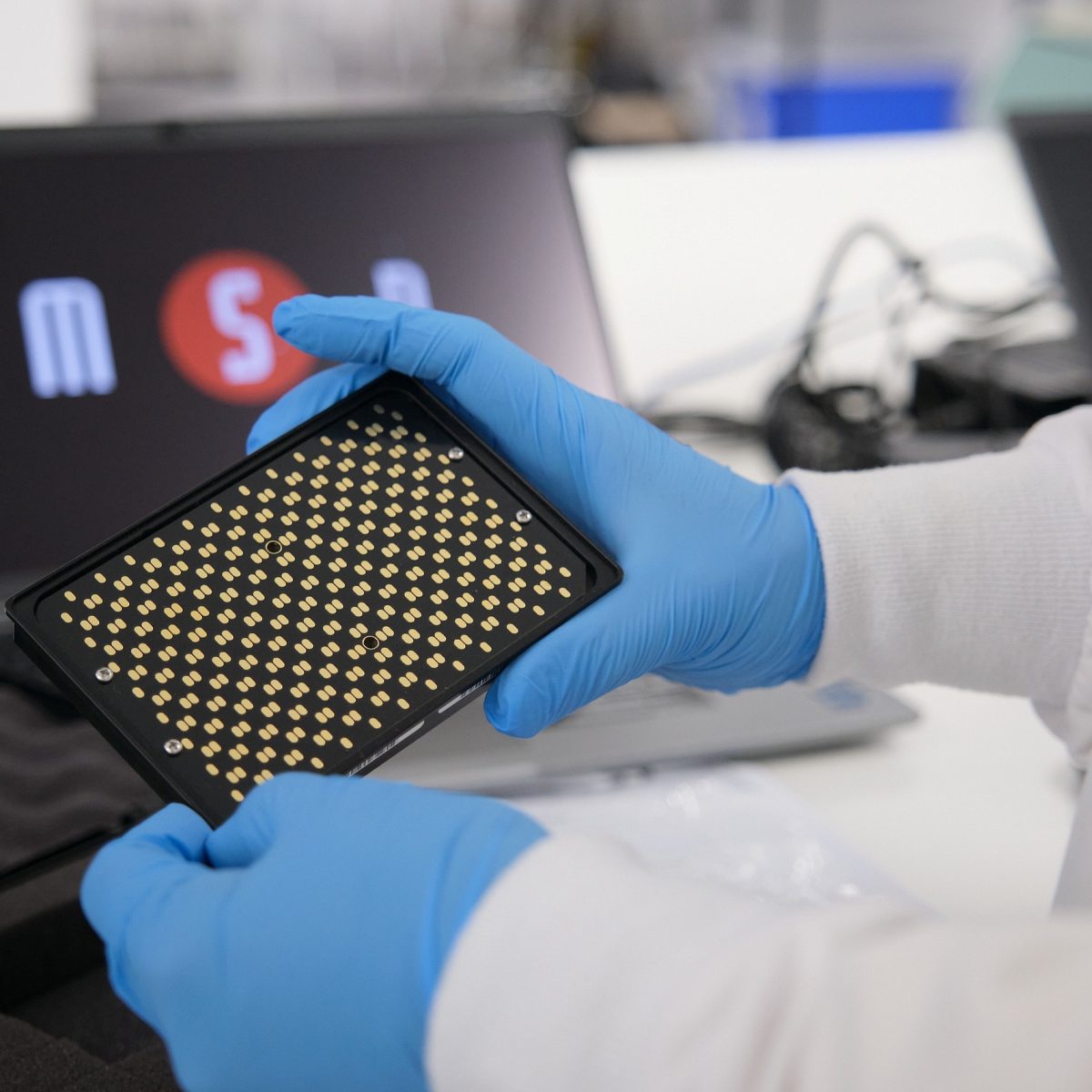
Other Immune Biomarker Assays: We offer both off-the-shelf, pre-validated assays and customised immune biomarker panels to help clients evaluate the immunomodulatory effects of biologics throughout clinical development. This includes ELISA-based assays, Luminex Bead Immunoassays, and MesoScale Discovery (MSD) Assays, among others.
For studies that require a more tailored analysis, our highly experienced team and consultative approach can help you design bespoke assays to meet your study’s unique needs.
Who are the immune assays designed to support?
Immune evaluation is important throughout clinical development. At Crux Biolabs, we often support clients as they begin early Phase 1 clinical trials to evaluate the safety and tolerability of their biologic in healthy volunteers. By working with clients early in their clinical trial design, we can help them understand what can be measured at each stage, ensuring they don’t miss a critical element that may support their drug approval process.
What collaboration with Crux Biolabs looks like
At Crux Biolabs, our clients benefit from early collaboration with our scientific team, allowing us to help them determine which immune readouts are most relevant to their study.
Let’s say a client wants to look at a new biologic targeting the PD-1 axis. When activated by its ligand, the PD-1 receptor serves to keep T cells in an ‘off’ position, helping to prevent undue inflammation. Dysregulation of this pathway plays a role in several cancer types and autoimmune diseases, so there is increasing interest in biologics that target the PD-1 axis.
When assessing the immune response to a biologic targeting PD-1, we understand that inhibition of this axis should lead to an activation of T cells. In this case, we would discuss with the client the design of a deep immunophenotyping panel to assess T-cell functioning using markers like CD69—an early marker of T-cell activation. We would look to see if more inflammatory cytokines are produced in response to PD-1 inhibition. We would also assess how much of the PD-1 receptor is being occupied by the biologic so we can test exactly what population it is binding to.
Together, these types of analyses can help researchers understand the safety and efficacy of their biologic, whether they are in preclinical development or in clinical trials.
Competitive Advantage of Crux Biolabs
A comprehensive assessment of the immune response to biologics is a critical part of the drug development pathway. Crux Biolabs is a leading provider of immune assays for biologics assessment, offering a unique combination of expertise, advanced capabilities and quality assurance. Our team’s extensive immunological knowledge helps clients define their research needs and select appropriate measurements for preclinical and clinical stages. We also offer diverse capabilities that are unmatched in the APAC region; for example, our alliance with KCAS Bio allows us to harmonise our spectral flow cytometry services to support clinical trials across APAC, Europe and the USA.
Importantly, Crux Biolabs can offer accelerated timelines without compromising on quality. Our clients can expect quick assay development and validation, helping them achieve accurate, reliable results while meeting their clinical testing timelines. Our commitment to quality is evident through our participation in programs such as EQAPOL—an independent quality assurance program that evaluates the performance of research laboratories. This ensures that our processes meet the highest standards in clinical research.
Whether you are in early biologic development or late in clinical trials, reach out to learn how Crux Biolabs’ services to support your study’s unique needs.
Contact us today to learn more about how we can help accelerate your research.